






A New Hope for Patients Living with Depression
For millions of Americans, depression is far more than feeling sad. It can make everyday tasks feel impossible, strain relationships, interfere with work, and diminish quality of life.
While antidepressant medications and psychotherapy help many individuals, approximately one-third of patients never achieve full remission despite multiple medication trials.
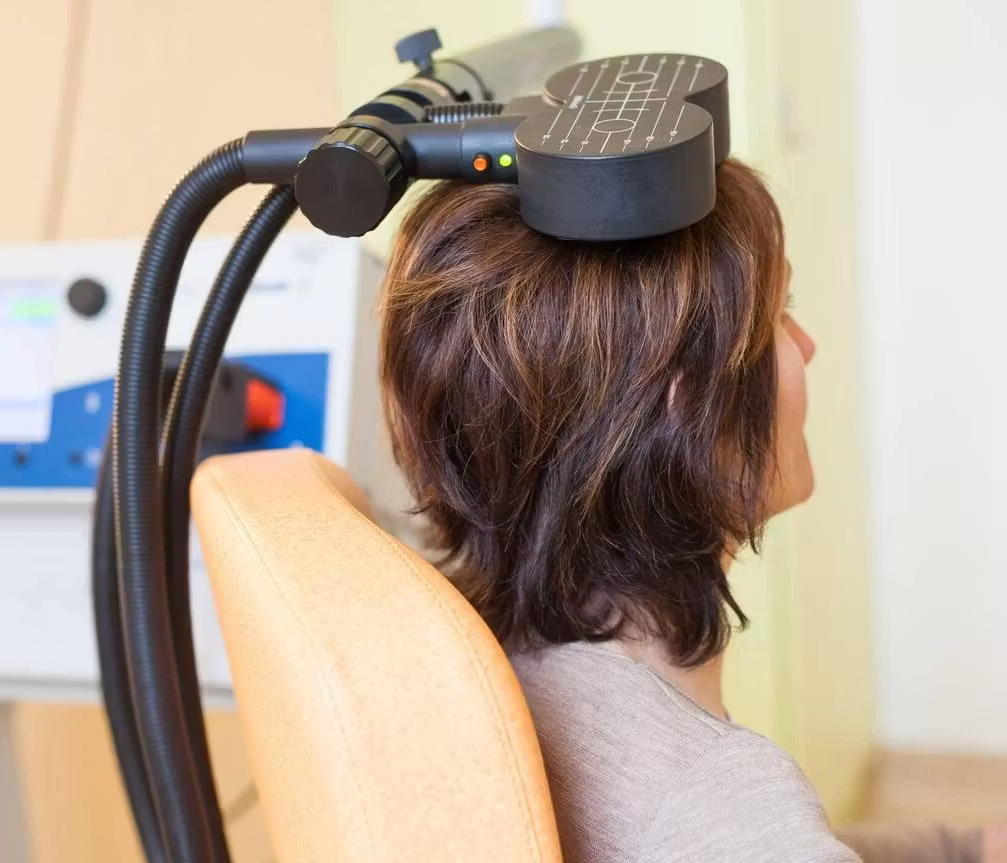
Fortunately, advances in neuroscience have produced an effective, evidence-based treatment known as Transcranial Magnetic Stimulation (TMS).
Unlike medications that affect the entire body, TMS uses targeted magnetic pulses to stimulate underactive brain regions associated with depression, helping restore healthier patterns of brain activity without surgery, anesthesia, or systemic side effects.
Today, TMS is recognized as one of the most important innovations in psychiatric treatment over the last two decades.
What Is Transcranial Magnetic Stimulation (TMS)?
Quick Summary
TMS is a non-invasive treatment that uses magnetic pulses to stimulate areas of the brain involved in mood regulation. Patients remain awake throughout treatment and can immediately return to normal daily activities.
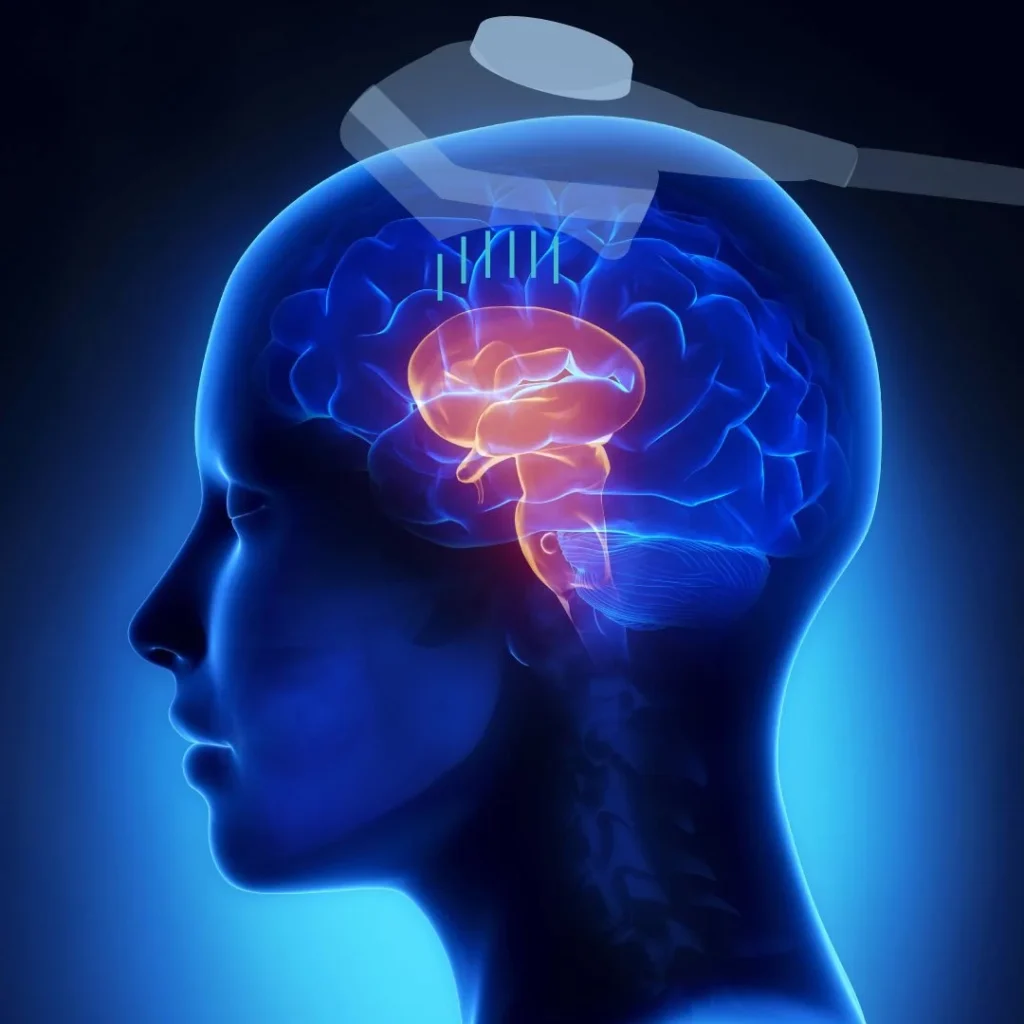
Treatment typically consists of:
| Treatment Component | Typical Course |
|---|---|
| Length of Session | 20–40 minutes |
| Treatments Per Week | 5 |
| Total Weeks | 6–8 |
| Average Treatments | 30–36 |
| Anesthesia | None |
| Recovery Time | Immediate |
How Does TMS Work?
TMS delivers focused magnetic pulses through the scalp, stimulating these underactive neurons.
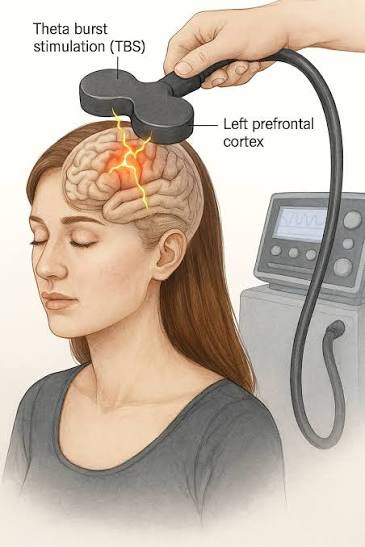
The brain communicates through billions of interconnected neurons.
In many patients with depression, researchers have observed reduced activity within the left dorsolateral prefrontal cortex (DLPFC), a region responsible for:
- Emotional regulation
- Decision making
- Motivation
- Concentration
- Executive functioning
Repeated stimulation promotes:
✅ Neuroplasticity
✅ Improved neural communication
✅ Healthier brain network connectivity
✅ Long-term changes in brain function
Unlike medication, TMS works directly on the affected brain circuitry rather than indirectly altering neurotransmitter levels throughout the body.
Why Does TMS Work?
Depression Is More Than a Chemical Imbalance
Modern neuroscience recognizes depression as a disorder involving both neurotransmitter changes and dysfunctional communication between brain networks.
TMS helps “retrain” these networks through repeated stimulation.
Researchers believe TMS may:
- Increase synaptic strength
- Improve cortical excitability
- Normalize abnormal connectivity
- Enhance serotonin, dopamine, and glutamate signaling
- Promote long-term neuroplasticity
This explains why many patients continue improving even after treatment has ended.
Conditions TMS May Treat
FDA-Cleared Conditions
| Diagnosis | FDA Cleared | Common Insurance Coverage |
|---|---|---|
| Major Depressive Disorder | ✔ | Yes |
| Obsessive-Compulsive Disorder | ✔ | Many plans |
| Smoking Cessation | ✔ (specific systems) | Limited |
| Migraine with Aura | ✔ (certain devices) | Varies |
Conditions Under Investigation
| Diagnosis | Research Status |
|---|---|
| PTSD | Strong |
| Generalized Anxiety Disorder | Strong |
| Bipolar Depression | Growing |
| Substance Use Disorders | Growing |
| Chronic Pain | Moderate |
| Fibromyalgia | Moderate |
| Parkinson Disease | Moderate |
| Alzheimer’s Disease | Early |
| Autism Spectrum Disorder | Early |
| Schizophrenia | Moderate |
| Stroke Rehabilitation | Growing |
Most insurers still consider these uses investigational unless specifically covered by policy.
Who Qualifies for TMS?
Although each insurance company has its own requirements, many patients qualify if they have:
✔ Major Depressive Disorder
✔ Moderate to severe symptoms
✔ Failed multiple antidepressant medications
✔ Medication intolerance
✔ Ongoing symptoms despite therapy
✔ No contraindications
TMS Success Rates
| Outcome | Approximate Percentage |
|---|---|
| Significant Improvement | 50–60% |
| Complete Remission | 30–40% |
| Minimal Side Effects | >90% |
Clinical outcomes continue to improve as protocols evolve.
Insurance Coverage for TMS
Most major insurers now recognize TMS as medically necessary for treatment-resistant depression.
Medicare
| Coverage |
|---|
| Traditional Medicare generally covers TMS when medical necessity criteria are met. |
National Commercial Insurance Coverage
| Insurance Company | Generally Covers TMS* |
|---|---|
| Aetna | ✔ |
| Anthem / Elevance | ✔ |
| Blue Cross Blue Shield | ✔ |
| Cigna | ✔ |
| Humana | ✔ |
| Kaiser Permanente | Many Plans |
| Optum | ✔ |
| UnitedHealthcare | ✔ |
*Coverage depends on plan benefits and medical necessity.
Hawaii TMS Insurance Coverage
| Hawaii Health Plan | Typical Coverage |
|---|---|
| HMSA | Yes (prior authorization required) |
| HMAA | Varies |
| Kaiser Hawaii | Yes |
| UHA | Many employer plans |
| Aetna Hawaii | Yes |
| Cigna Hawaii | Yes |
| UnitedHealthcare Hawaii | Yes |
Hawaii Medicaid (Med-QUEST)
Coverage may be available through participating managed care organizations:
| Medicaid Plan |
|---|
| AlohaCare |
| HMSA QUEST |
| Kaiser QUEST |
| Ohana Health Plan |
| UnitedHealthcare Community Plan |
Medical necessity and prior authorization are generally required.
Why Prior Authorization Is Often the Biggest Barrier
Many patients assume that once their psychiatrist recommends TMS, treatment can begin immediately.
Unfortunately, this is rarely the case.
Insurance companies often require comprehensive documentation before approving treatment.
Typical requirements include:
| Requirement | Why It’s Needed |
|---|---|
| Psychiatric Evaluation | Confirm diagnosis |
| PHQ-9 Scores | Demonstrate severity |
| Medication History | Show treatment resistance |
| Psychotherapy Records | Document previous treatment |
| Clinical Notes | Establish medical necessity |
| Prior Medication Failures | Meet payer criteria |
| Appeals (if denied) | Challenge adverse decisions |
Even a single missing document can delay approval by weeks.
The Administrative Burden on Providers
Offering TMS means far more than operating the equipment.
Practices often spend hours:
- Reviewing records
- Obtaining outside documentation
- Completing payer-specific forms
- Tracking authorizations
- Coordinating peer-to-peer reviews
- Responding to additional documentation requests
- Appealing denials
Without dedicated utilization review support, these administrative demands can delay patient care and place a significant burden on clinical staff.
How Access Revenue Hawaii Supports TMS Providers
Dedicated Utilization Review. Passionate Patient Advocacy.
Every prior authorization represents a patient who has often exhausted traditional treatment options and is searching for relief.
Our Utilization Review specialists understand that timely access to care can make a meaningful difference in a patient’s recovery. We partner with behavioral health providers to prepare thorough, evidence-based authorization requests, coordinate directly with insurance companies, respond to requests for additional information, facilitate peer-to-peer reviews, and pursue appeals when medically appropriate.
Our goal is simple: remove administrative barriers so providers can focus on treating patients while we focus on advocating for access to medically necessary care.
Whether your organization is launching a new TMS program or expanding an existing one, our team is here to help streamline the authorization process and improve the patient experience.
Ready to strengthen your TMS program? Contact Access Revenue Hawaii to learn how our experienced Utilization Review team can help reduce authorization delays, improve approval rates, and support patients on their path to recovery.
Frequently Asked Questions
Does insurance cover TMS?
Most Medicare and commercial health plans provide coverage for treatment-resistant depression when medical necessity criteria are met and prior authorization is approved.
Does Hawaii Medicaid cover TMS?
Coverage may be available through Med-QUEST managed care organizations when the service is medically necessary and authorized according to plan requirements.
Is TMS painful?
Most patients describe treatment as mild tapping on the scalp. Temporary scalp discomfort or headache is the most common side effect.
How long does TMS last?
Most treatment courses consist of 30–36 sessions over six to eight weeks, although protocols may vary.
Can I drive after treatment?
Yes. Because TMS does not require sedation or anesthesia, patients typically return to normal activities immediately after each session.