



Hawaiʻi Behavioral Health Industry Update | October 2026
Published by Access Revenue Hawaii, LLC Team, posted by CEO
As Hawaiʻi’s upcoming Community Care Services (CCS) transition continues amid ongoing associate-level licensure challenges, October brings important developments for behavioral health providers, mental health practices, and substance use disorder treatment facilities.
This month’s update highlights several issues that could affect credentialing, reimbursement, clinical documentation, and utilization management heading into 2027.
1. Hawaiʻi’s Act 93: New Developments in Optum’s Supervised Billing Policy

Hawaiʻi’s associate-licensed behavioral health providers continue to encounter challenges with UnitedHealthcare and Optum Behavioral Health.
In our previous update, Access Revenue Hawaii reported that Optum issued contracts to several associate-licensed clinicians, complete with negotiated fee schedules, only to revoke them because their licensure classifications were reportedly not recognized.
These developments have raised questions about how Hawaiʻi implemented Act 93 and how it treated associate-licensed mental health counselors, psychologists, and marriage and family therapists.
An alternative reimbursement pathway?
Optum’s national Supervisory Services Reimbursement Policy, Policy No. 2024RP202A, provides a pathway for certain services performed by practitioners working toward independent licensure under qualified supervision.
The policy requires modifier U5 to identify eligible supervised services, along with the required information identifying the independently licensed, Optum-credentialed supervising provider.
However, an important distinction applies: the policy does not automatically establish reimbursement eligibility for Hawaiʻi. In other states, reimbursement is available where Optum, under the contract, lists a fee schedule; it has yet to be determined whether modifier U5 will affect reimbursement or whether the procedure will be reimbursed at the rate tied to the associate-level supervisor’s contract. Per Hawaiʻi’s Optum representative, this policy applies to Associate MFTs, MHCs, and Psychologists because they are not eligible for independent contracting. LSWs, however, are eligible for independent contracting. It’s important to note that LSWs will not use modifier U5 or policy 2024RP202A at the time of claim submission after services have been rendered.
Access Revenue Hawaii has requested clarification on how the policy applies to Hawaiʻi’s associate-level licenses, including whether these providers may furnish supervised services under appropriately credentialed and contracted supervisors, which Optum Hawaiʻi confirmed with a “yes.”
Our recommendation: Do not assume a signed supervisor contract alone guarantees reimbursement. Obtain confirmation of eligibility, supervisory billing requirements, claim configuration, and plan-specific approval before submitting claims. – Or we will follow up; contact us today!
Official resource: Optum Supervisory Services Reimbursement Policy, 2024RP202A
2. ʻOhana Health Plan to AlohaCare: The CCS Transition Raises Important Reimbursement Questions
Effective November 1, 2026, AlohaCare will assume administration of Hawaiʻi’s Community Care Services (CCS) program from ʻOhana Health Plan.
AlohaCare and the Hawaiʻi Med-QUEST Division have communicated their commitment to continuity of care during the transition.
For behavioral health providers, however, continuity of care is only part of the equation. Continuity of reimbursement is equally important.
What happens to specialized facility contracts?
Access Revenue Hawaii has been seeking answers regarding negotiated agreements held by institutional behavioral health providers, including mental health treatment facilities, substance use disorder programs, residential treatment centers, and intensive outpatient programs.
Our primary concerns include whether:
- Existing individually negotiated reimbursement rates will transfer to AlohaCare.
- Specialized CPT and HCPCS codes currently reimbursed under ʻOhana agreements will remain available.
- Facility-specific arrangements covering case management, vocational rehabilitation, specialized group treatment, and related services will be honored.
- Existing authorizations and reimbursement methodologies will continue without interruption.
AlohaCare has begun publishing CCS-specific provider information, including behavioral health authorization forms originally developed for ʻOhana Health Plan. This is an encouraging step, but it does not independently confirm that all negotiated contracts, reimbursement arrangements, and claim configurations will carry forward.
At the time of this publication, Access Revenue Hawaii has not received a definitive response addressing these specialized institutional contracting concerns.
We are particularly interested in how AlohaCare will accommodate billing methodologies and individually negotiated codes not traditionally supported under its existing reimbursement structure.
Our recommendation: Facilities should review their existing CCS agreements, identify specialized reimbursement provisions, and request written confirmation regarding contract loading, authorized services, and claims processing before November 1.
We will continue sharing verified updates as additional information becomes available.
Official resources:
AlohaCare Community Care Services
AlohaCare CCS Provider Resources
3. Medicare Advantage 2027: Preparing for Open Enrollment and Coverage Changes
The Centers for Medicare & Medicaid Services (CMS) released its 2027 Medicare Advantage and Part D landscape on September 28, 2026.
CMS projects that the national weighted average Medicare Advantage monthly premium will decrease from $14.37 in 2026 to $12.00 in 2027.
Although national premiums may decline, behavioral health providers should pay particular attention to changes in individual health plan products, networks, benefits, and authorization requirements.
Medicare’s annual open enrollment period runs from October 15 through December 7, 2026.
Why this matters for revenue cycle management
Patients who change Medicare Advantage coverage may experience changes in their provider network, referral requirements, cost-sharing responsibilities, or existing treatment authorizations.
For ongoing psychotherapy, psychiatry, IOP, PHP, residential, and other behavioral health services, these changes can create avoidable payment disruptions.
ARH recommendation: Begin preparing for comprehensive 2027 Medicare Advantage eligibility reverification in December, with particular attention to the exact plan product, effective date, participating network, and authorization requirements.
Simply verifying that a patient has “HMSA Medicare” or another carrier’s Medicare Advantage coverage is not sufficient when multiple products have different participation and benefit arrangements.
Official resource: CMS 2027 Medicare Advantage Announcement
4. ASAM Seeks Public Input on Fourth Edition Behavioral Addictions Framework
The American Society of Addiction Medicine (ASAM) announced the availability of a draft framework for a new Behavioral Addictions Volume of The ASAM Criteria, Fourth Edition.
The public comment period remains open through November 20, 2026.
This development represents an important step toward broadening standardized assessment and treatment guidance for behavioral addictions beyond traditional substance use disorders.
For residential and withdrawal-management providers currently utilizing ASAM Levels 3.5 and 3.7, the proposed framework is not yet an adopted replacement for existing medical-necessity criteria, placement requirements, or payer authorization standards.
Exciting news from Access Revenue Hawaii
We are pleased to share that our very own Dr. Christine Gilmore, Chief Operations Officer and Director of Utilization Management, has been requested to submit clinical case studies for consideration by the American Society of Addiction Medicine.
If selected, Dr. Gilmore’s contributions will appear in the forthcoming Behavioral Addictions Volume of The ASAM Criteria, Fourth Edition.
We are excited about the opportunity for her clinical experience and expertise to contribute to a nationally recognized framework that helps shape addiction treatment practices.
Official resource: ASAM September 29, 2026 Update
5. Emerging Clinical Concerns: Cannabis Hyperemesis and Kratom Withdrawal
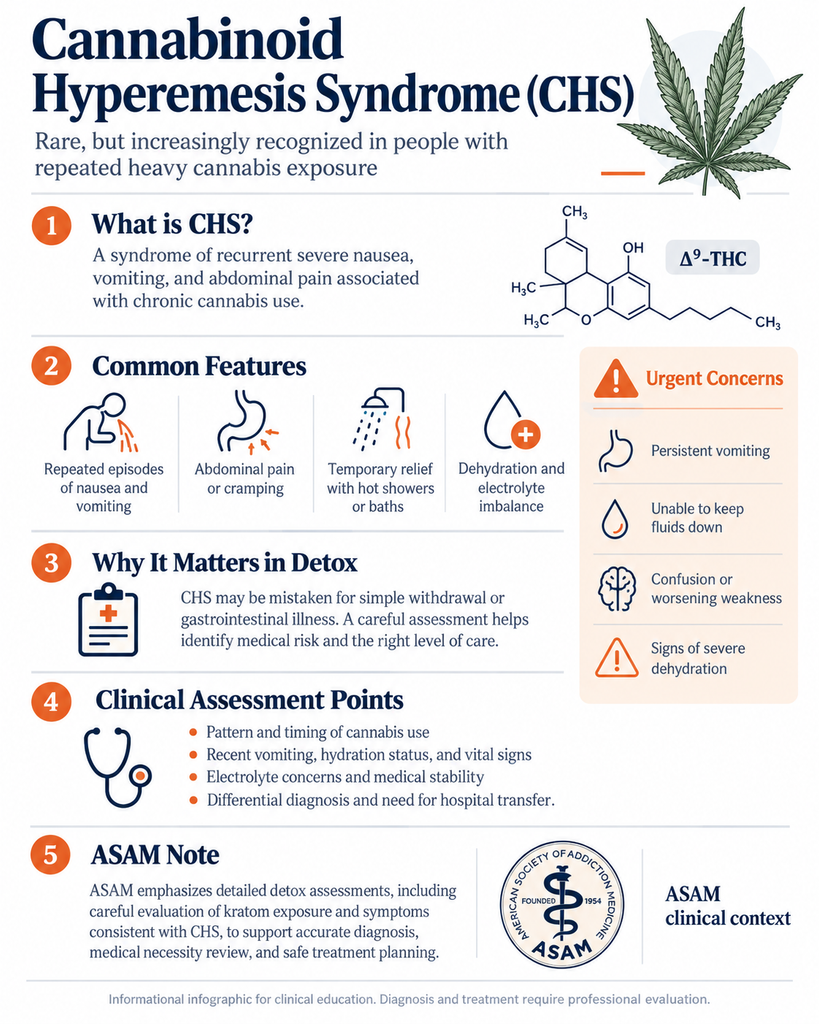
ASAM’s September 29 clinical publication also highlighted emerging evidence and clinical concerns involving cannabinoid hyperemesis syndrome (CHS) and increasing kratom exposure.
CHS may involve severe recurring nausea, vomiting, abdominal pain, dehydration, and electrolyte disturbances among individuals with prolonged heavy cannabis exposure.
Kratom and concentrated 7-hydroxymitragynine (7-OH) products also warrant careful assessment when evaluating substance exposure, dependence, and possible withdrawal symptoms.
Implications for ASAM 3.7 Detoxification Programs

For medically monitored withdrawal-management facilities, accurate admission assessments and differential diagnoses are essential.
Patients presenting with severe vomiting, dehydration, or other medical symptoms should receive an appropriate clinical assessment rather than having every symptom automatically attributed to substance withdrawal.
Documentation should support the patient’s medical needs, appropriate level of care, facility capabilities, and continuing medical necessity.
ARH recommendation: Review detoxification admission protocols to ensure relevant cannabis, kratom, and 7-OH exposure histories are captured when clinically indicated, along with medical stability and treatment needs.
These findings do not introduce new H0010, UB-04, or revenue-code billing requirements, but they reinforce the importance of sound clinical documentation.
Official resource: ASAM Weekly, September 29, 2026
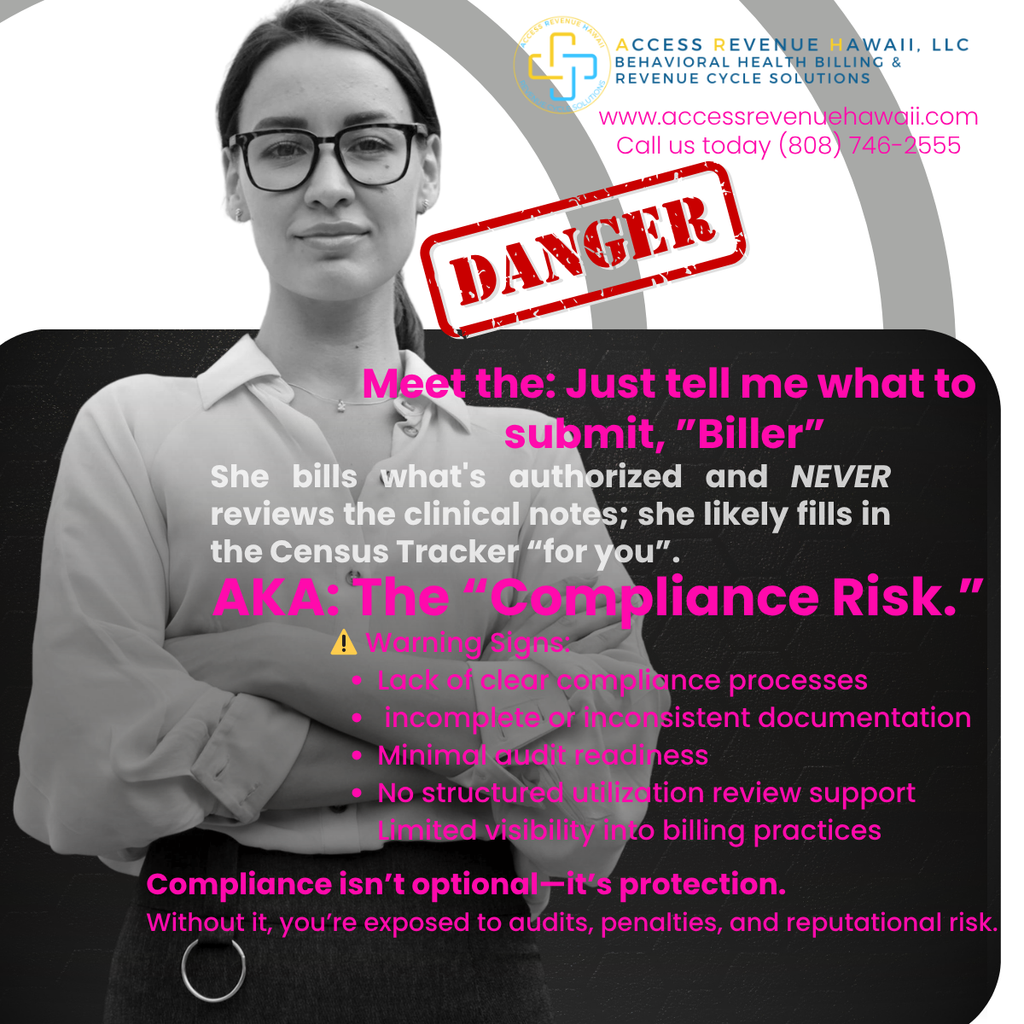
Looking Ahead: Staying Prepared, Staying Informed
As Hawaiʻi’s behavioral health reimbursement landscape continues to evolve, timely communication between clinical, administrative, credentialing, utilization management, and billing teams has never been more important.
At Access Revenue Hawaii, we remain committed to helping our partner practices and treatment facilities navigate these developments while supporting appropriate reimbursement and continuity of patient care.
Have questions about behavioral health billing, credentialing, utilization management, or specialized facility contracts?
Want to make sure you’re ahead of the game, in compliance, your revenue is safe, your program is growing, and your RCM feels less like a 3rd party and more like an in-house department?
Visit Access Revenue Hawaii or contact our team at (808) 746-2555.
Access Revenue Hawaii, LLC
The Billing and RCM Firm with Puʻuwai.
Publication note: Information is current as of October 11, 2026. Commentary regarding ARH’s communications and operational experiences represents firsthand company observations. Independently confirm payer reimbursement rules, provider eligibility, authorization requirements, and contractual arrangements before implementation. Access Revenue Hawaii can speak only to contracted clients and our experience with them.