



A new federally supported training initiative may soon provide substance use disorder treatment programs with another valuable resource for strengthening clinical competency, particularly for organizations providing ASAM 3.5 residential treatment and ASAM 3.7 withdrawal management services.
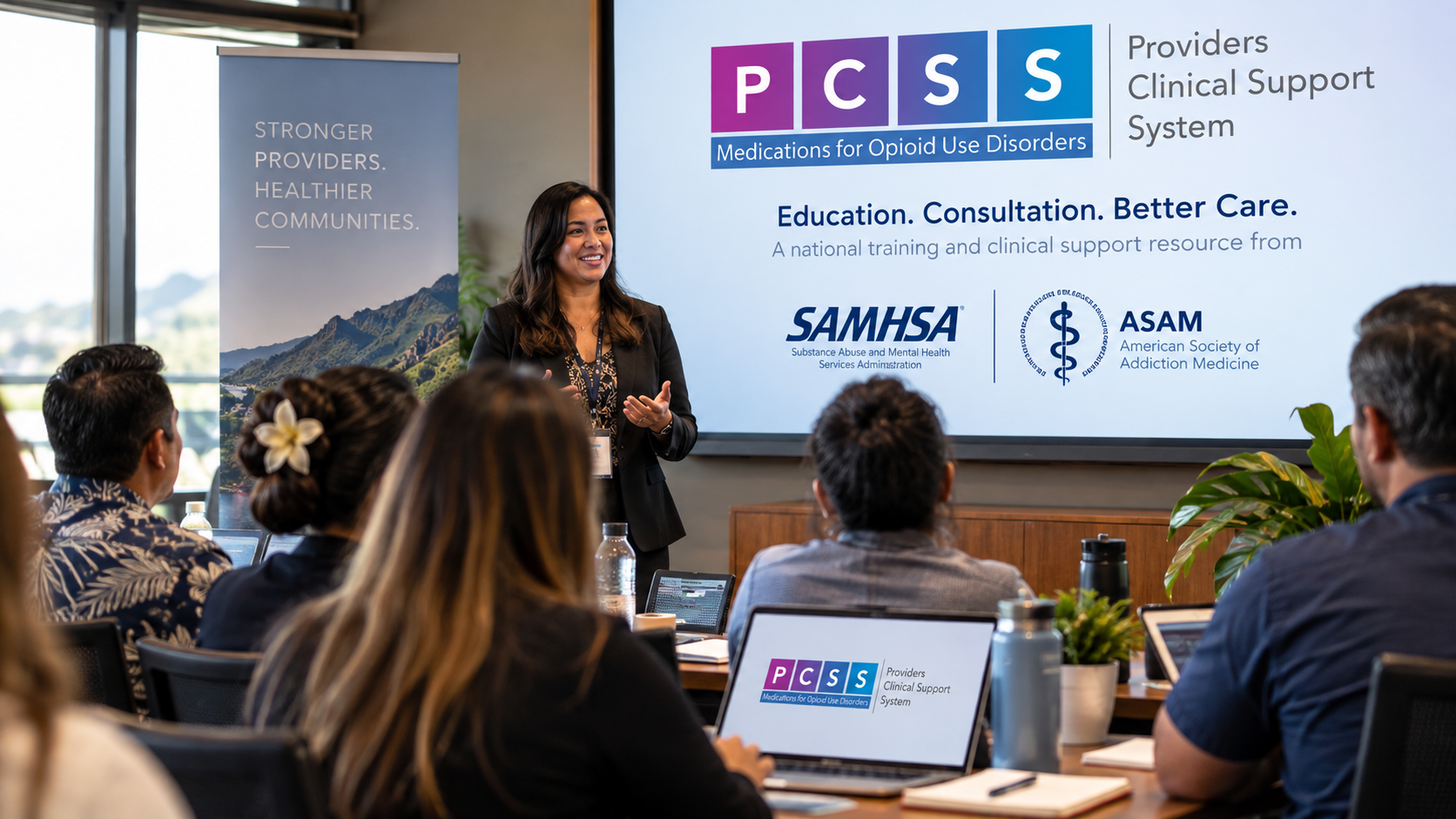
On September 1, 2026, the Substance Abuse and Mental Health Services Administration awarded the American Society of Addiction Medicine (ASAM) a three-year cooperative agreement to operate the new Providers Clinical Support System – Substance Use Disorder Treatment (PCSS-SUD Treatment) program.
Unlike earlier PCSS initiatives that concentrated heavily on opioid use disorder, the new program is designed to provide education and clinical support across a much broader spectrum of substance use disorders.
What Is PCSS-SUD Treatment?
PCSS-SUD Treatment is a national clinical education and workforce-development initiative intended to help healthcare professionals improve their ability to identify, assess and treat substance use disorders using evidence-based practices.
According to ASAM, the program will include education addressing:
- Alcohol use disorder
- Opioid use disorder
- Stimulant use disorder
- Other and emerging substances
- Evidence-based SUD treatment practices
- Live educational webinars
- Case-based learning
- Mentoring and clinical consultation
The broader scope is important. Today’s SUD treatment environment rarely involves a single substance or a single clinical discipline. Residential and withdrawal-management programs routinely encounter patients presenting with polysubstance use, co-occurring psychiatric disorders, complex medical conditions and rapidly changing patterns of substance use.
PCSS-SUD Treatment offers clinicians a nationally supported resource to keep their knowledge and clinical practices current.
Why This Matters for ASAM 3.7 Withdrawal Management
For programs operating ASAM Level 3.7 medically monitored withdrawal management, workforce competency is particularly important.
Patients entering withdrawal management may present with alcohol withdrawal, opioid withdrawal, stimulant use, polysubstance exposure, medication interactions and significant co-occurring medical or psychiatric conditions.
Training available through PCSS-SUD Treatment could therefore be especially useful for:
Physicians, APRNs and other medical providers: Continuing education can strengthen assessment, withdrawal-management planning, medication management and recognition of patients who require escalation to a higher level of medical care.
Registered nurses: Education addressing withdrawal syndromes, medication-assisted treatment and emerging substances can supplement facility-specific nursing competency and continuing-education programs.
Therapists and SUD counselors: Case-based education can reinforce understanding of addiction medicine, treatment engagement, co-occurring conditions and the transition from stabilization into ongoing treatment.
This does not mean completion of PCSS training by itself satisfies ASAM, licensing, accreditation or payer staffing requirements. Facilities still need to determine the specific qualifications, competencies and training required for each position under applicable state law, accreditation standards, payer contracts and the ASAM Criteria.
What About ASAM 3.5 Residential Programs?
The opportunity extends beyond detoxification and withdrawal management.
For ASAM Level 3.5 clinically managed high-intensity residential services, the new program could become a useful component of ongoing clinical workforce development.
Residential programs frequently treat individuals with severe substance use disorders alongside psychiatric, social, family and recovery-environment challenges. Education covering alcohol, opioids, stimulants and emerging substances can help clinical teams maintain a contemporary understanding of the populations they serve.
For clinical directors, counselors, therapists, case managers and other treatment professionals, federally supported case-based education and mentoring may also provide practical opportunities to translate evidence-based treatment principles into everyday residential care.
Training Is Also a Compliance Issue
Clinical education should not exist separately from a facility’s compliance program.
When a facility uses external training to establish or maintain staff competency, the training should be documented.
Depending upon the program and applicable requirements, a personnel or competency file may include the course title, training provider, completion date, certificate or transcript, CE/CEU documentation where applicable and evidence that the education relates to the employee’s assigned clinical responsibilities.
That becomes particularly important when a payer, licensing authority or accreditor asks a facility to demonstrate that personnel are appropriately trained to provide the services documented in the medical record.
A certificate does not replace competency assessment. Instead, it can become one piece of the evidence demonstrating an organization’s ongoing commitment to workforce development.
Does This Change SUD Billing or Reimbursement?
No immediate billing or reimbursement change has been announced as a result of this program.
PCSS-SUD Treatment does not, by itself, change:
- CMS-1500 or UB-04 billing requirements
- H0010 withdrawal-management billing
- H0018 residential SUD billing
- H0015 IOP billing
- H0035 or S0201 PHP billing
- Prior authorization requirements
- ASAM level-of-care authorization criteria
- Medicare or Medicaid coverage
- Commercial payer reimbursement
- TRICARE requirements
For revenue cycle teams, this should therefore be treated as a clinical workforce and compliance development, rather than a new payer policy.
That distinction is important. Training programs can improve clinical quality and documentation, but they do not independently establish medical necessity, authorization or coverage for a billed service.
Where Clinical Training and Revenue Cycle Meet
Although PCSS-SUD Treatment isn’t a reimbursement initiative, stronger clinical competency can have a downstream revenue cycle benefit.
For higher levels of behavioral healthcare, reimbursement increasingly depends on whether the medical record demonstrates why the patient requires the level of care being requested.
For example, an ASAM 3.7 authorization request should not simply state that a patient is experiencing alcohol withdrawal. The record needs to support the severity of withdrawal, medical and psychiatric risk, monitoring requirements, interventions being provided and why a lower level of care would not safely meet the patient’s needs.
Likewise, documentation supporting continued ASAM 3.5 residential treatment should demonstrate why the patient’s current severity, relapse risk, functional impairment and recovery environment continue to require a 24-hour structured treatment setting.
Clinical education and revenue cycle operations therefore intersect at a critical point: medical necessity documentation.
Better-trained clinicians are better positioned to recognize, treat and document the clinical factors that utilization review teams and payers evaluate.
What Access Revenue Hawaii Recommends
Behavioral health and SUD organizations should consider adding PCSS-SUD Treatment to their clinical education and compliance resource libraries as the new program’s curriculum becomes available.
For ASAM 3.7 programs, medical and nursing leadership should watch for training addressing alcohol withdrawal, opioid treatment, polysubstance use and emerging substances.
For ASAM 3.5 programs, clinical leadership should consider relevant education for therapists, counselors, case managers and other members of the interdisciplinary treatment team.
Organizations should also establish a consistent process for retaining certificates and other completion records when external education is incorporated into staff competency requirements.
Most importantly, facilities should connect continuing education back to clinical documentation, medical necessity and level-of-care decision-making, rather than treating education as an isolated annual compliance exercise.
ARH Will Continue Monitoring the Program
Access Revenue Hawaii will be monitoring PCSS-SUD Treatment as ASAM releases its first training modules, webinars, mentoring opportunities and clinical resources.
We will be particularly interested in resources applicable to ASAM 3.5 residential treatment, ASAM 3.7 withdrawal management, IOP/PHP programs and organizations treating patients with co-occurring mental health and substance use disorders.
Read ASAM’s announcement about the new PCSS-SUD Treatment program
How Access Revenue Hawaii Can Help
Operating a substance use treatment program requires more than submitting claims. Clinical documentation, utilization review, authorization, payer requirements and billing must work together.
Access Revenue Hawaii helps behavioral health and substance use treatment organizations build revenue cycle processes that support the care they provide, from verification of benefits and utilization review through billing, denials, appeals and accounts receivable.
For residential, withdrawal management, IOP, PHP and outpatient behavioral health organizations, our team can also help identify documentation and authorization vulnerabilities before they become payer denials.
Visit our Contact page to schedule a meeting and learn more about how we work with providers and facilites, as well as, what sets us apart from everything else in the Islands.